The following is an abridged version of the introduction to Rich Girl Nation, which I’ve shortened considerably, both for newsletter length and because I want to be #mysterious. 
The Invitation A third tray of cubed cheese circulated past me. I reached over to add a hunk of white cheddar to an already-crowded plate, intent on maximizing my free food consumption. Pinching a glass of red wine between my right forefinger and thumb and using the remaining three fingers to maintain a precarious grip on my cracked iPhone 6S, I glanced around the room vibrating wall to wall with women. Despite my awkward cocktail party “nowhere to set things down” dance, I felt oddly at ease in this crowd. Normally I hated the milling and shouty small talk that accompanied networking-style functions, but something about this evening—the Dallas stop on the Refinery29 Money Diaries book tour—was different, even a little subversive. It was like the women around me were bringing all the energy and accoutrement you might expect to find at BravoCon to the boy’s club world of finances. So far, this personal-finance-centric event seemed like everything I thought money wasn’t: fun, spirited, and for me. At twenty-three, I hadn’t yet seriously considered my finances (beyond a vague desire to get rich enough to convincingly wear red-bottomed shoes to work), but my scrappy friend Kylie had insisted I join her that night. Up until that point, I was mostly met with sympathetic nods or blank stares anytime I broached the subject of money with friends—this was especially true for those who still used credit cards tied to their parents’ checking accounts. But Kylie and I shared a mutual interest in making sure our credit reports weren’t torched by our new matching Discover cards. She was the type of friend to whom you could bring just about anything and be met with unbridled enthusiasm: She was creative and unpredictable, someone who would tell you she tried a party drug at an underground disco in the same breath that she mentioned she was halfway through an online MBA program she was paying for herself with money she earned freelancing for ESPN. At the time, I was making $52,000 and doing a decent job of shuffling a little extra into savings each month—otherwise, I felt financially rudderless. My excitement about becoming a high-powered career woman and stomping around boardrooms in tasteful patent leather heels evaporated almost immediately upon being lulled into the monotonous rhythm of an endless expanse of forty-hour work weeks. I was thrilled to be able to pay my bills, but the entire arrangement felt inescapably claustrophobic. By the time I walked through the doors of the Money Diaries event, I had a suspicion that there was something about savvy money management that could be transformational in paving my path out of dependence on a paycheck, but I didn’t know much beyond that. Fortunately, Kylie managed to get me out of the house on a school night (!) in fall 2018, usurping my usual post-work routine of melting into my bed and scrolling Facebook (like I said…it was 2018). When it was time to take our seats for the guests of honor, two women found their way onstage. The backdrop, decor, and accents in the venue looked as though they had materialized directly from the Instagram Explore page, dripping in the precise trendiness that only a millennial media company could conjure on short notice. The younger woman’s name was Lindsey Stanberry, the “Work & Money” director at Refinery29 and author of Money Diaries, and the older woman’s name was Manisha Thakor, the VP of financial wellbeing at Brighton Jones, a prominent wealth management firm that even I, in my ignorance, had heard of. It was clear that Lindsey was intended to be the bridge between the audience, a group of predominantly young women, and Manisha, who was an established financier with an intimidating pedigree. At every turn, Lindsey would offer a personal touch that made someone in the audience feel better—she was paying off student loans, had a child, and was still able to buy a home, she’d reassure, inadvertently highlighting how absurd it is that the presence of one thereby makes the other two achievements seem unrealistic. They shared intensely personal money origin stories—like the salacious details of Manisha’s divorce proceedings, in which her ex-husband’s mistress sent her a greatest-hits compilation of their amorous email correspondence. (Her takeaway: Get a prenup.) Having been in several preprofessional organizations in college, I was accustomed to forcing myself to pay attention to the subject matter at any given panel. My similarly ambitious classmates would seem genuinely riveted by speakers about crisis communication and earned media impressions; I was mostly feigning interest given the more earnest preoccupations of my early twenties (read: boys and parties). But that night, I was on the edge of my seat. I didn’t have to pretend to listen—I was captivated by the two women onstage before me, knowledgeable and independent, rattling off the names of investment accounts and strategies with an ease and assuredness that mesmerized me. Manisha spoke with such fluidity and confidence that it made me wish, for the first time ever, that I had studied finance in school. The presence of Lindsey, our twenty-something translator, seemed to implicitly suggest that we, too, could become our own personal money managers. At the end, they announced they’d be taking questions from the audience, and I was certain that a brief, awkward Q&A would be the stopping point for the evening. I was wrong. Hand after hand flew into the air. Here, in this room of hundreds of strangers, women asked questions that self-evidently revealed intimate financial details. Amazed, I listened to questions with implications that reached far beyond the interest rate in a savings account. These were career-shaping, relationship-changing, and life-altering scenarios filtered through the lens of money—and here we were, a millennial pink town hall, baring the souls of our asset allocations to the congregation and asking for guidance. “I’m in a lot of credit card debt and I don’t know how to break this cycle, but I hate my job and feel stuck.” “Should I be contributing to my 401(k) or trying to build an emergency fund so I can start my own business?” “My boyfriend and I want to buy a home, but I have a lot of debt, and he doesn’t know.” Whenever an audience member would ask a question on the simpler end of the spectrum that I knew the answer to, I had to physically restrain myself from interjecting. I didn’t know other young women had these questions, let alone felt encumbered enough by them to attend a book tour on a Tuesday evening and ask strangers for help in front of a crowd. I learned more in those two hours than I had in the previous twenty-three years of my life about personal finance. It cost $15. (And there was free wine, which, at 23, would’ve lured me to a cookout where they were grilling women named Katie.) Being surrounded by women talking about financial security felt like coming home to a place I had never been before. As the event ended, there were two things I couldn’t ignore: a newfound conviction that if you want options in this life, you need to understand money—and that I felt a visceral, pure attraction to the subject. “That was fun,” Kylie chirped as we emerged from the air conditioning into the warm Texas evening and crossed the street to our cars. She had launched into an out-loud pros-and-cons list of different options for a new investment account. As I listened to her, my friend in white go-go boots and elaborate feathered earrings discussing the intricacies of a Roth IRA, I was surprised that these two things could go together—then surprised at my surprise. Why did this scene feel so foreign to me? Why was this the first time I was having a conversation like this one? As I drove home, the high of the night faded into a strange sadness: I didn’t want to stop talking so openly about money, especially now that I could see other young women had the same burning questions and willingness to discuss them that I did. For 120 minutes, the paths of a few hundred women intersected in the venue space of an arts building. The lives of women who wanted—either desperately or just curiously—to know more about what they were supposed to do with the paychecks they were receiving every other week, about how to get ahead in a world where boards of directors bore uniformly white male faces and where questions about investing could invite incredulous scoffs. Many of the women there, I’m sure, were invited by friends who knew more than they did or simply felt more comfortable admitting interest in something not traditionally coded as “for girls.” I felt determined for this to be the beginning—not the end—of my involvement in the world of personal finance and women. A seed was planted that evening that I continued to nurture with a yearslong binge of financial information (the Money with Katie brand would be born eighteen months later). At the time, I had been running a personal blog for a few years as a fun side project, and I abruptly stopped posting musings about life and dating—and replaced them with energized revelations about personal finance that, upon reading now, sound almost manic in their enthusiasm. Just one month after I sat in the crowd before Lindsey and Manisha, I wrote a post titled “Why I Talk About Money” in which I marveled at my newfound knowledge: I feel like I’m discovering all these secrets and philosophies that are utterly mind-blowing. At the risk of hyperbole, it has completely changed the way I think about my income, the way I spend, and the path to wealth and freedom. With a convert’s zeal, I began studying compound interest charts. Every single one told me that being in my twenties was my superpower. All I wanted to do was share this eye-opening information with others: that you didn’t have to have a six-figure salary or degree in accounting to build wealth, because damn it, a few wise investments and decades of time could do practically all the heavy lifting for you. It wasn’t until the early weeks of pandemic boredom in April 2020 that I decided to collect all my new knowledge and shut down my old blog in favor of a more formal project, which I decided to call “Money with Katie” when I realized such a simple URL—moneywithkatie.com—was available. Instead of overthinking the purchase (something that had become commonplace in my fresh financially responsible worldview), I bought the domain for $20 and figured I’d spend a few minutes setting up the site navigation before taking a break to make some lunch and go for a walk. Instead, I emerged from my room into the common area of my dark apartment in a fugue state eight hours later, having built out the entire site and written the first few blog posts. I didn’t have a business plan or any grand monetization strategy, but I decided later that I’d commit to two blog posts per week for a year and see what happened. 
It’s fitting, I suppose, that my baptism in the world of personal finance was by and for women, because I learned quickly that the game women are playing when it comes to pursuing financial freedom has a unique set of rules and regulations. Although the beginning of my journey was characterized by youthful optimism about our prospects, as I gained context, I realized the history of women and money is a rich text, no pun intended. Because as we’ll explore in the next seven chapters, there’s no way around it: Women experience money differently than men. We face financial choices, obstacles, and pressures that are partially or entirely absent from a man’s experience. Not only do we exist in a cultural context that demeans women’s ability to manage their money responsibly (“Women be shoppin’!”), assumes they’re unable or uninterested in grasping the technicalities behind financial principles (“bad at math”), and assigns them a sort of manipulative malevolence when it comes to their romantic interactions with men (the “gold digger” trope), but products marketed to women cost more, women are statistically less likely to earn the high incomes with which it’s easiest to accrue wealth, and even women who are their household’s primary earner are more likely to bear a disproportionate amount of the underpaid or unpaid labor that makes society function. 
Women face off with a unique constellation of cultural norms, systemic shortcomings, and, in the US particularly, failures of policy. It’s only after we understand the full picture that we can begin—individually and collectively—to paint a different one for ourselves and those who come after us. We must address all the contributing factors: from individual decisions to cultural norms to systemic shortcomings. Individual solutions cannot cure our collective maladies, but they can equip individual people with the capacity and resources to make a larger impact in their arenas of influence. Our financial decisions aren’t made in a vacuum. Women in the US weren’t even allowed to have their own bank accounts until 1974, so it’s not like we’ve had centuries to perfect our collective asset allocation. Half the battle is looking around and behind us to become aware of these dynamics—only then can we begin to chart a viable path forward. You can preorder your copy of Rich Girl Nation now—signed copies are available at Barnes & Noble for the same price. | 




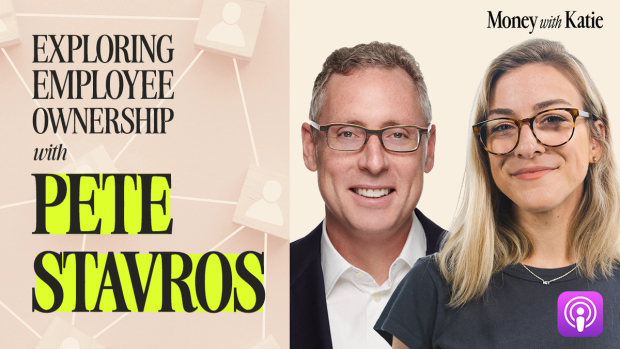
 When I first read about this story, my guard was up. We had covered the private equity industry on the show recently, and my conclusions weren’t favorable. Given its reach—around 13 million Americans, or 1 in 25, work for a business owned by a PE firm—it has the power to shape work culture at scale, for better or worse.
 Ironically, that’s exactly why Pete Stavros, co-head of global private equity for KKR, thinks he’s in a unique position to bring employee ownership to the mainstream. “Most workers have no wealth,” his





 Frame it: Introducing Honey, Lavender, and Gray base frames from